
Inflammation Causes Disease: Cryotherapy can Help

The article below discusses the adverse effects chronic inflammation can have on our health. There are very few treatments for chronic, systemic inflammation: most involve drug interventions such as NSAIDs and Celebrex. Whole-body cryotherapy is one of the few non-invasive, non-pharmaceutical, safe treatments for reducing systemic chronic inflammation. It is highly effective, efficient (sessions are a maximum of 3 minutes), and safe!!
Dr. David M. Marquis, DC, DACBN
Inflammation controls our lives. Have you or a loved one dealt with pain, obesity, ADD/ADHD, peripheral neuropathy, diabetes, heart disease, stroke, migraines, thyroid issues, dental issues, or cancer?
If you answered yes to any of these disorders, you are dealing with inflammation.
Sadly, most of us are suffering from one or more of these disorders but have no idea how to eliminate inflammation. Most doctors are using pharmaceuticals instead of addressing the root cause.
It often seems extremely foreign to most people when they realize that the majority of inflammatory diseases start in the gut with an autoimmune reaction that progresses into systemic inflammation. To truly be effective at managing, or hopefully overcoming, a disease, it needs to be addressed at all levels. Taking a look at where this process starts is the key.0
Where Does Inflammation Begin?
Your gut is lined with an incredibly large and intricate semipermeable membrane. The surface area of your gut can cover two tennis courts when stretched out flat.
Its degree of permeability fluctuates in response to a variety of chemically mediated conditions. For example, when your cortisol is elevated due to the stress of an argument or your thyroid hormone levels fluctuate due to burning the midnight oil, your intestinal lining becomes more permeable in real time.
Then you sit down to eat, and partially undigested food, toxins, viruses, yeast, and bacteria have the opportunity to pass through the intestine and access the bloodstream. This is known as leaky gut syndrome, or LGS.
When the intestinal lining is repeatedly damaged by leaky gut syndrome, damaged cells called microvilli are unable to function properly. They become unable to process and utilize the nutrients and enzymes that are vital to proper digestion. Eventually, digestion is impaired, and nutrient absorption is compromised. As exposure increases, your body mounts an attack against these foreign invaders. It responds with inflammation, allergic reactions, and other symptoms that we relate to a variety of diseases.
So you might ask, what’s the harm of inflammation and ongoing allergic reactions?
It may sound relatively harmless, but this situation can and often does lead to numerous serious and debilitating diseases. Since your immune system can become overburdened, these inflammatory triggers are cycled continuously through your blood, where they affect nerves, organs, connective tissues, joints, and muscles. You can probably begin to see how diseases develop.
Inflammation Triggers the Symptoms of Disease
The presence of inflammation is what makes most diseases perceptible to an individual. It can, and often does, occur for years before it reaches levels sufficient to be apparent or clinically significant. How long it has been smoldering determines the severity of a disease and often the prognosis, assuming the inflammation can be controlled. One could also argue that without inflammation, most diseases would not even exist. Take a look at this list of diseases and their relationship with inflammation:
Disease Mechanism
- Allergy: 4 Immune-Mediated Types + Sensitivities, all of which cause inflammation
- Alzheimer’s: Chronic inflammation destroys brain cells
- Anemia: Inflammatory cytokines attack erythropoietin production
- Ankylosing Spondylitis: Inflammatory cytokines induce autoimmune reactions against joint surfaces
- Asthma: Inflammatory cytokines induce autoimmune reactions against the airway lining
- Autism: Inflammatory cytokines induce autoimmune reactions in the brain, arresting right hemisphere development
- Arthritis: Inflammatory cytokines destroy joint cartilage and synovial fluid
- Carpal Tunnel Syndrome: Chronic inflammation causes excessive muscle tension, shortens tendons in the forearm and wrist, and compresses the nerves.
- Celiac: Chronic immune-mediated inflammation damages the intestinal lining
- Crohn’s Disease: Chronic immune-mediated inflammation damages the intestinal lining
- Congestive heart failure: Chronic inflammation contributes to heart muscle wasting
- Eczema: Chronic inflammation of the gut and liver with poor detoxification and often antibodies against Transglutaminase-3.
Fibromyalgia: Inflamed connective tissue, often food allergy-related and exacerbated by secondary nutritional and neurological imbalances. - Fibrosis: Inflammatory cytokines attack traumatized tissue
- Gall Bladder Disease: Inflammation of the bile duct or excess cholesterol produced in response to gut inflammation
- GERD: Inflammation of the esophagus and digestive tract is nearly always food-sensitive and pH-driven
- Guillain-Barré: An autoimmune attack on the nervous system, often triggered by an immune response to external stressors such as vaccinations.
- Hashimoto’s Thyroiditis: Autoimmune reaction originating in the gut, triggered by antibodies against thyroid enzymes and proteins
- Heart attack: Chronic inflammation contributes to coronary atherosclerosis
- Kidney failure: Inflammatory cytokines restrict circulation and damage nephrons and tubules in the kidneys
- Lupus: Inflammatory cytokines induce an autoimmune attack against connective tissue
- Multiple Sclerosis: Inflammatory cytokines induce autoimmune reactions against myelin
- Neuropathy: Inflammatory cytokines trigger autoimmune reactions against myelin, vascular, and connective tissues, thereby irritating nerves.
- Pancreatitis: Inflammatory cytokines induce pancreatic cell injury
- Psoriasis: Chronic inflammation of the gut and liver with poor detoxification
- Polymyalgia Rheumatica: Inflammatory cytokines induce autoimmune reactions against muscles and connective tissue
- Rheumatoid Arthritis: Inflammatory cytokines induce autoimmune reactions against joints
- Scleroderma: Inflammatory cytokines induce an autoimmune attack against connective tissue
- Stroke: Chronic inflammation promoted thromboembolic events
- Surgical complications: Inflammatory cytokines (often pre-dating the surgery) slow or prevent healing
Why Inflammation Must Be Addressed at Its Root…
The fact that your immune system drives the inflammatory process in disease is well established. Unfortunately, Western medicine offers little in the way of actual answers as to managing or overcoming the Autoimmune process. The typical approach to therapy is to suppress the immune response with immunosuppressive agents or, sometimes, steroids. Both approaches are designed to reduce inflammation, but neither stops the underlying disease processes or allows for damaged tissues to regenerate.
Unless you turn off the actual cause of the fire (inflammation), all you have done is postponed the inevitable and potentially destroyed more of the building (your body) by allowing the fire to smolder subclinically.
Every day on TV, you can see professional athletes and others acting as spokespeople for Methotrexate, Orencia, Enbrel, Humira, Remicade, and other drugs, which are largely designed to mask inflammation or suppress the immune response. None of these drugs actually has the capacity to correct the underlying condition, and yet the imagery the ads leave the viewer with is that you will have your life back.
The Link Between Gut Dysfunction and Inflammatory Diseases
The term inflammation rarely evokes a clear image in anyone’s mind unless they are experiencing it. Then it begins to make sense, given the pain and dysfunction associated with inflammation. The ability to be inflamed is absolutely necessary for normal repair processes to occur. It is when the regulation of inflammation is not tempered or controlled that we begin to have a problem with inflammation.
It has been shown that many of the inflammatory diseases we suffer from are gut-mediated but do not present as gut issues. Dr. Maios Hadjivassiliou of the United Kingdom, a world authority on gluten sensitivity, has reported in The Lancet that “gluten sensitivity can be primarily and at times, exclusively a neurological disease.” This means that people show gluten sensitivity by having problems with brain function despite having no gastrointestinal problems whatsoever. Dr. Hadjivassiliou indicates that the antibodies a person has when they are gluten-sensitive can be directly and uniquely toxic to the brain. For this, specialized tests have been developed.
Another author, published in a recent issue of Pediatrics, stated, “This study suggests that the variability of neurologic disorders that occur in celiac disease is broader than previously reported and includes softer and more common neurologic disorders, including chronic headache, developmental delay, hypotonia, and learning disorders or ADHD.” Clearly, we have to broaden our evaluation criteria and perhaps the definition of disease when a patient presents with complaints that do not fit into a typical clinical box.
How to Evaluate Inflammatory Diseases
Since inflammation is commonly mediated by the gut, it is a logical starting point in the evaluation process of any patient. There are seven common areas to consider when examining causative factors for gastrointestinal dysfunction that create an environment for chronic inflammation. They are listed below, along with key triggers within the category of evaluation:
- Diet: Alcohol, Gluten, Casein, Processed Foods, Sugar, Fast Food
- Medications: Corticosteroids, Antibiotics, Antacids, Xenobiotics
- Infections: Such as H-Pylori, Yeast or Bacterial Overgrowth, Viral or Parasite Infection
- Stress: Increased Cortisol, Increased Catecholamines
- Hormonal: Thyroid, Progesterone, Estradiol, Testosterone
- Neurological: Brain Trauma, Stroke, Neurodegeneration
- Metabolic: Glycosylated End Products (inflammatory end products of sugar metabolism), Intestinal Inflammation, Autoimmune
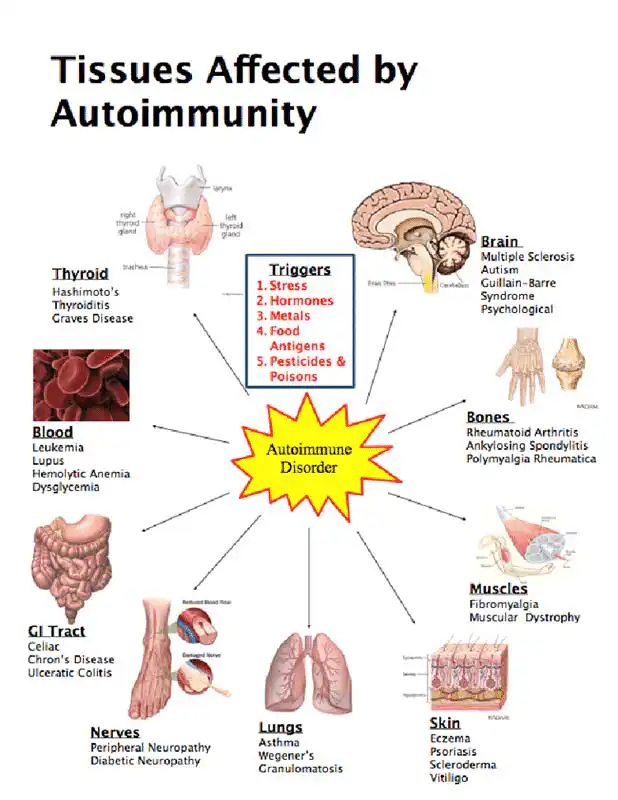
Inflammation and Autoimmune Disease
The truth is that FOOD MATTERS. That’s right, it’s not just a movie (which by the way you should all watch!). Hyperpermeability of the gut, regardless of whether you can feel it or not, is often a significant cause of an extremely long and ever-growing list of conditions. The inflammatory cascade triggered by any inflammatory trigger (diet, medications, infections, stress, hormonal, neurological, or metabolic) can compromise intestinal permeability and initiate the leaky gut mechanism.
Given the variety of triggers, it is often possible to reduce an individual’s immune reactivity without curing it if leaky gut is not the primary trigger of the inflammatory process. There are multiple models of autoimmunity, although it is increasingly accepted that once you develop autoimmunity, you will also have increased intestinal permeability.
Autoimmunity can be put into remission, which can have profound, life-improving consequences, but it can also be reactivated if life circumstances change. It is considered “Incurable”. You may be able to change its expression, but thinking you are going to take a boatload of supplements, change your diet, and cure the condition will generally leave you feeling let down.
Waxing-and-waning responses are par for the course in autoimmunity. When stress increases despite adequate dietary intake, a person is likely to experience a flare-up. This inflammation is initiated by increased iNOS (inducible nitric oxide synthase) activity, which causes an immediate increase in intestinal permeability, much like the effect of elevated cortisol levels during stress. Once this occurs, serum protein particles leak through and become extremely reactive. Gluten is an extremely common serum protein in the context of increased permeability, simply due to the ubiquity of daily exposure.
If you take on too many projects, eat poorly, and have limited or poor sleep, you can bet that intestinal permeability will increase and food will start to leak through.
Your immune system will then begin to recognize these proteins as similar to other proteins, such as those in the cerebellum and thyroid. When that occurs, you will experience symptoms that are generally far removed from what someone would consider to be food-related, since they are not felt in the gut. Instead, you experience brain fog, pain, fatigue, poor sleep, anxiety, or endocrine dysfunction. When antibodies bind to our structural proteins, specific genes are turned on in a specialized type of immune cell. Inflammatory chemicals, called cytokines, are produced and strongly damaging to brain function. In fact, elevated cytokines are seen in such devastating conditions as Alzheimer’s disease, Parkinson’s disease, multiple sclerosis, and even autism.
You see, autoimmune disease is not clinically diagnosed until you have tissue destruction. For some neurodegenerative conditions, you need up to 70 percent demyelination (nerve damage) before it will show on an MRI. You cannot afford to wait until that level of destruction before taking action. If you are symptomatic in any way and test positive on any of the tests listed above, you have Autoimmune Reactivity, and that is enough to take action and make life changes to potentially stop the process from continuing. Inflammation can be a great friend in this sense. Look at it as an early warning sign and take action before it turns into a fire that rages out of control from one body tissue to another.
Recap & Treatment
Inflammation is rampant. In fact, 1 in 12 women and 1 in 24 men are dealing with full-blown autoimmune-mediated inflammation. The number of undiagnosed people is going to be much higher. People with inflammation in the early phases of autoimmunity will often claim no dietary involvement. This is an inaccurate assumption, however, because autoimmunity is often triggered by factors not strictly related to diet, and diet can become a secondary trigger later in the condition’s development. If you are dealing with inflammation, get a comprehensive evaluation to identify what is perpetuating your personal fire.
Lifestyle: Remove adverse mechanisms (Stress, Over-exercising, Poor Sleep, Blood Sugar Dysregulation, Poor Social Behaviors). Lifestyle factors are huge; the stress response triggers the immune marker IL-6, which activates the TH17 immune pathway, the fast track to Autoimmunity.
Lifestyle: Restore beneficial mechanisms: Create conditions of love & appreciation, maintain positive attitudes, maintain proper exercise (training to a maximum heart rate range; i.e., Peak Fitness exercises), get adequate sleep, restore blood sugar balance, and facilitate healthy social interactions. All these factors promote the production of endogenous opioid peptides, which activate the TH3 immune pathway, thereby reducing Autoimmunity.
Dietary Support: Stabilize blood sugar, remove food Autoimmune triggers, and promote intestinal integrity with proper flora, nitric oxide, and glutathione pathways. Include fermented foods and supplements as needed.
Remember, a wide array of health problems, including but not limited to chronic pain, obesity, ADD/ADHD, peripheral neuropathy, diabetes, heart disease, stroke, migraines, thyroid issues, dental issues, and cancer, are all rooted in inflammation, which must be properly addressed if you wish to be healed. About the Author
Dr. Marquis is a Chiropractic Physician who is Board Certified in Clinical Nutrition in San Luis Obispo County, CA. He also holds certifications in Botanical Medicine, Class IV Laser Therapies, Manipulation Under Anesthesia, Interactive Metronome Therapies, and is currently pursuing another Diplomate in Functional Neurology.
David M. Marquis, DC, DACBN
Diplomate, American Clinical Board of Nutrition
860 Oak Park Blvd. #202
Arroyo Grande, Ca 93420
(805) 481-3499