
New Research: Acne is Caused by Inflammation
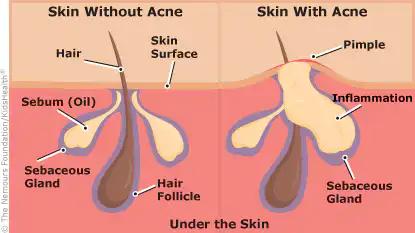
Acne isn’t fun. The skin condition affects roughly 80 percent of adolescents and can persist well into adulthood. The psychological and social impacts of acne are especially serious because it affects adolescents at a crucial period when they are developing their personalities. Peer acceptance is very important for this age group, and research shows strong links between physical appearance and peer status. Acne can affect:
- Self-esteem and body image—acne sufferers may have low self-esteem and may avoid eye contact or grow their hair long to cover their acne.
- Social withdrawal/relationship building—acne sufferers find it hard to form new relationships, especially with the opposite sex, due to a lack of self-confidence.
- Education/work—acne sufferers may refuse to go to school or work, leading to poor academic or work performance.
Historically, curing acne hasn’t been easy. Pharmaceutical treatments such as Accutane and antibiotics can be effective at reducing symptoms, but they carry serious side effects and should be used only in severe cases.
Dermatologists have long believed that bacterial infection is the cause of acne; the latest research, however, indicates that bacteria may cause acne symptoms but do not trigger the skin disorder. Based on the latest research, the most effective treatments now target systemic inflammation and oxidative stress as the causes of acne.
The role of inflammation in acne
The latest research shows that inflammation plays both primary and secondary roles in acne.
We’re all familiar with inflammation in the later (secondary) stages of acne: pimples are red, swollen, and painful because they are rife with localized inflammation. Where does this localized inflammation come from? It is the immune system’s normal response to infection: in acne, there is bacterial overgrowth in the pores, and the immune system triggers inflammation to fight off the infection. The immune system sends white blood cells to fight the infection—the accumulation of these cells causes swelling (inflammation). Infection in the skin thus produces the symptoms of acne: painful, red, swollen pimples.
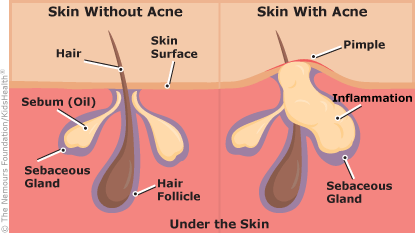
The above process describes inflammation’s secondary role in acne development. Scientists are now focusing on the primary role of inflammation in acne: they believe it triggers the entire process. That is, inflammation causes acne!
New research shows that the entire acne process begins when systemic inflammation (inflammation at the cellular level) causes normal sebum levels in hair follicles to “oxidize”. This means that inflammation damages sebum and reduces its oxygen content. Notably, inflammation isn’t the only cause of oxidation in sebum—stress, environmental toxins, and other “free radicals” can also trigger oxidation. Regardless of the source of the oxidation, the bacteria known to cause acne (p. acnes) thrives in a low-oxygen environment and starts multiplying like crazy. Once bacteria colonize the hair follicle, infection develops, triggering secondary inflammation—leading to red, round, inflamed pimples on the skin’s surface. The sequence of events goes like this: inflammation triggers oxidation, which triggers a bacterial infection, which then triggers a second localized inflammatory response!
What causes systemic inflammation:
Systemic inflammation can be caused by stress, poor diet (including food intolerances and gastrointestinal problems), environmental factors, and underlying health disorders such as autoimmune dysfunction.
If inflammation is the source of acne, how can we treat and prevent it? There are two effective ways:
- Lower systemic inflammation: By lowering inflammation throughout the body, it is possible to reduce sebum oxidation in skin pores/hair follicles. Reducing this oxidation creates a less hospitable environment for P. acnes and lowers the risk of infection. In the absence of infection, there will be no secondary inflammatory response from the immune system, and painful, red, swollen pimples will not develop!
- Increase antioxidants: research has shown that acne sufferers experience greater oxidative stress than people with healthy skin. Oxidative stress can be caused by inflammation and other factors. Oxidative stress in the skin can be reduced by increasing antioxidant levels systemically and locally in the skin. Antioxidants can be consumed orally (through supplements and food sources) and applied topically to the skin.
What is the role of cryotherapy in the treatment of acne?
Research has shown that people with acne have higher levels of inflammatory chemicals in their blood and significantly lower levels of several antioxidant nutrients compared to people with healthy skin.
Cryotherapy can effectively address both of these problems!
ChillRx Cryotherapy offers two cryotherapy treatments that can treat and prevent acne.
- Whole-body cryotherapy is the brief exposure of the body (from the neck down) to very cold air. Whole-body cryotherapy is extremely anti-inflammatory—cold exposure causes vasoconstriction in all blood vessels, which helps evacuate inflammatory markers. Once evacuated, inflammation is detoxified through the lymphatic system. Whole-body cryotherapy also triggers the release of blood-borne anti-inflammatory biochemicals; these cytokines travel throughout the body, including areas that are NOT directly exposed to the cold, reducing cellular inflammation. Whole body cryotherapy is an excellent tool for reducing systemic inflammation. Whole-body cryotherapy has also been shown to increase antioxidant levels. By increasing antioxidant levels, oxidative stress in the skin is reduced, and sebum is much less likely to be oxidized; bacterial infection in the skin pores is also less likely to occur.
- ChillRx Cryotherapy also uses local cryotherapy to treat acne. Local cryotherapy applies very cold air directly to acne-affected skin. The cold air causes immediate local vasoconstriction, shrinking inflamed pimples and reducing redness. Local cryotherapy (when applied to the face, it is called CryoFacial) reduces mild scarring, redness, swelling, and pain related to acne. There is a visible cosmetic improvement to the skin when local cryotherapy is applied.
Managing inflammation and correcting antioxidant depletion often brings much-needed relief for acne patients. Preventing local skin inflammation and reducing systemic inflammation are key to clear skin. ChillRx Cryotherapy offers medically formulated cryotherapy treatment programs for acne. Our medical staff has designed our acne treatment program to be the most effective, efficient, and safe protocol available. We offer student discounts and a comprehensive, non-pharmaceutical approach to acne.
Sources:
Does the plasma level of vitamins A and E affect the acne condition?
https://www.ncbi.nlm.nih.gov/pubmed/16681594
OXIDANT/ANTIOXIDANT STATUS IN OBESE ADOLESCENT FEMALES WITH ACNE VULGARIS
https://www.ncbi.nlm.nih.gov/pmc/articles/PMC2800868/
The role of the antioxidative defense system in papulopustular acne.
http://www.ncbi.nlm.nih.gov/pubmed/11349462https://www.ncbi.nlm.nih.gov/pubmed/11349462
Tissue and blood superoxide dismutase activities and malondialdehyde levels in different clinical severities of acne vulgaris.
https://www.ncbi.nlm.nih.gov/pubmed/18684157
Oxidative stress in patients with acne vulgaris.
https://www.ncbi.nlm.nih.gov/pmc/articles/PMC1533901/?tool=pubmed
Superoxide dismutase and myeloperoxidase activities in polymorphonuclear leukocytes in acne vulgaris.
https://www.ncbi.nlm.nih.gov/pubmed/16001098
Erythrocyte glutathione peroxidase activity in acne vulgaris and the effect of selenium and vitamin E treatment.
https://www.ncbi.nlm.nih.gov/pubmed/6203294
Clinical implications of lipid peroxidation in acne vulgaris: old wine in new bottles.
https://www.unboundmedicine.com/medline/citation/21143923/full_citation/Clinical_implications_of_lipid_peroxidation_in_acne_vulgaris:_old_wine_in_new_bottles_
Sebaceous gland lipids
https://www.ncbi.nlm.nih.gov/pmc/articles/PMC2835893/?tool=pubmed