
Cryotherapy: Potential Prevention & Treatment for Parkinson’s Disease
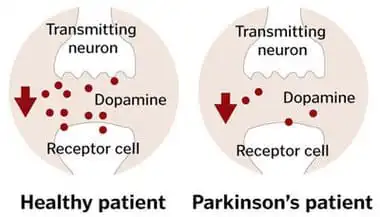
Parkinson’s disease (PD) is a long-term degenerative disorder of the central nervous system that mainly affects the motor system. Parkinson’s disease results from the death of cells in the substantia nigra region of the midbrain, which causes insufficient dopamine production. Dopamine is the chemical messenger that coordinates smooth and balanced muscle movement.
Symptoms of Parkinson’s Disease:
- Motor problems: shaking, tremor, rigidity, slowness of movement (bradykinesia), difficulty walking, speech & voice disturbances, facial blankness;
- Cognitive: problems with planning, cognitive flexibility, abstract thinking, rule acquisition, inhibiting inappropriate actions and initiating appropriate actions, working memory, and selecting relevant sensory information;
- Depression, apathy, anxiety;
- Sensory, sleep, and emotional problems;
- Dementia in advanced stages.
Parkinson’s Disease is not fully understood, but researchers agree that there are several potential causes for the neuronal death that is a universal feature of the disease. Potential causes may be influenced by the interaction of:
- Genetics: those with a family member affected are more likely to get the disease themselves.
- Environmental: exposure to pesticides.
- Prior head injury.
The above circumstances increase the risk of developing Parkinson’s Disease. Neuronal death in this region may be due to:
- Build-up of alpha-synuclein proteins (called Lewy bodies) in these neurons. It is thought that some form of immunodeficiency develops, in which toxic synucleins are not cleared from the brain. Synucleins then “aggregate,” causing Lewy bodies. This immune incompetence may be caused by localized neuroinflammation in the substantia nigra.
- Mitochondrial dysfunction.
- Oxidative stress.
- Neuroinflammation (specifically pro-inflammatory cytokines iNOS, TNF, NF-κB, IL-1β, and IFN-γ) may act as a blockade of typical neuroprotective pathways.
Researchers have found that the following behaviors and interventions can reduce the risk of developing Parkinson’s Disease:
- Exercise in middle age reduces the risk of Parkinson’s disease later in life.
- Caffeine appears to be protective, with a greater decrease in risk associated with higher intake of caffeinated beverages such as coffee.
- Tobacco smoke may reduce the risk of PD by a third when compared to non-smokers. Nicotine may act as a dopamine stimulant.
- Estrogen enhancement.
- Anti-inflammatory treatments.
Current treatment options for Parkinson’s Disease:
- Dopamine agonists (to increase dopamine levels)
- Anti-inflammatory diet & physical rehabilitation
- Deep-brain stimulation has been used to reduce motor problems
- Anti-inflammatory treatments such as NSAIDS and whole body cryotherapy
At ChillRx, we believe there is a potential role for whole-body cryotherapy in preventing Parkinson’s Disease.
- Neuroinflammation may play a role in initiating the disease by precipitating neuronal death in the substantia nigra. Malfunctioning immune cells, called microglia, may be activated by neuroinflammation. This neuronal death reduces dopamine production and signals the onset of disease and symptoms.
- α-synuclein accumulation is a universal feature of Parkinson’s Disease. α-synuclein accumulation may occur due to neuroinflammation, which may prevent normal processes for clearing toxic α-synuclein. Reducing neuroinflammation may delay or prevent disease by maintaining normal clearance of toxic synucleins, preventing aggregation, and preventing disease initiation.
- Peripheral and systemic inflammation have been significantly implicated in both the onset and progression of Parkinson’s disease. Systemic inflammation can cross the blood-brain barrier; once localized in the substantia nigra, PD may develop. Whole-body cryotherapy can significantly reduce systemic and peripheral inflammation caused by autoimmune disorders, infections, injuries, or other causes. By reducing inflammatory load throughout the body, we believe we can reduce the risk of developing Parkinson’s Disease.
At-risk individuals (those with a family history, head injury, or high exposure to pesticides) can benefit from whole-body cryotherapy by reducing their systemic inflammatory load. Systemic inflammation may lead to localized neuroinflammation in the brain and has been implicated in several neurodegenerative diseases, such as Parkinson’s and Alzheimer’s Disease.
Note: Once the disease process has initiated, neuroinflammation and neuronal death create a vicious cycle, which creates the degenerative, progressive nature of Parkinson’s Disease. Neuroinflammation may cause initial neuronal death; neuronal death releases toxic biochemicals that further activate neuroinflammation. This cycle is self-perpetuating, leading to progressive neuronal degeneration in this brain region and symptom intensification.
The progressive nature of Parkinson’s based on this cycle of neuroinflammation and neuronal death suggests that preventative anti-inflammatory treatments earlier in life may have a protective role, prior to initiation of the disease. Anti-inflammatory treatments, when the disease has progressed, are less effective because the vicious disease cycle of neuronal death and neuroinflammation has already taken hold.
At Chill Cryotherapy, we believe there is a potential role for whole-body cryotherapy to assist in the treatment of early-stage Parkinson’s Disease.
- The progression of Parkinson’s may be delayed by reducing neuroinflammation. Dying neurons (a hallmark feature of PD) release toxic biochemicals (e.g., synuclein aggregates), which trigger local inflammation. This neuroinflammation then precipitates more microglia activation and neuronal death, and a vicious progressive cycle for the disease ensues. Once the disease is established, treatments that modulate the inflammatory response may be the most promising means of slowing its progression.
- Anti-inflammatory treatments have been found to reduce anxiety, depression, and apathy associated with Parkinson’s Disease. It is thought that anxiety, depression, and apathy are inflammation-related. By reducing localized and systemic inflammation, these symptoms may improve, allowing for a better quality of life.
At ChillRx, we are committed to helping our clients prevent and treat Parkinson’s Disease with whole-body cryotherapy. We believe whole-body cryotherapy can reduce systemic inflammatory load, thereby lowering the risk of developing the disease. Whole-body cryotherapy has also been shown to reduce neuroinflammation by lowering inflammatory cytokines (specifically iNOS, TNF, NF-κB, IL-1β)—these cytokines have also been shown to be elevated in patients with Parkinson’s disease.
The Chill Cryotherapy medical advisor oversees our cryotherapy protocols for the prevention and treatment of Parkinson’s Disease. Please call us for more information about preventing and treating early-stage Parkinson’s Disease with whole-body cryotherapy.